

Newsletter Sign up
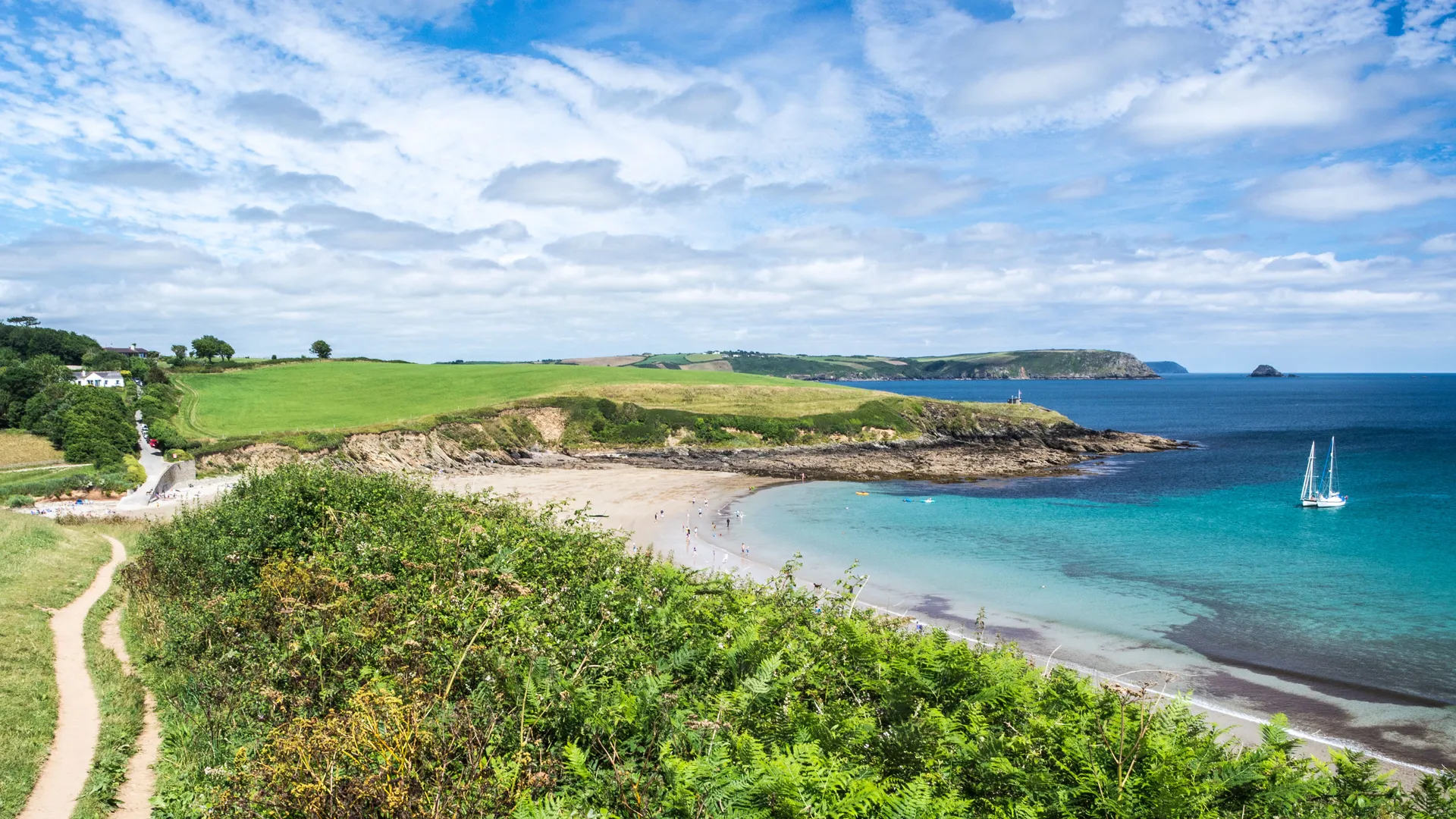
Our Cornwall beach guide
Cornwall is world-famous for its beaches, and this Cornwall beach guide helps separate the unforgettable from the merely outstanding. Across the county lie no fewer than 300 bays, strands and hidden coves, each special in its own distinctive way.
There are large family beaches blessed with panoramas of golden sand. There are unspoilt, largely unvisited coves, guarded like secrets by locals for their hushed, uncrowded beauty. On the North Coast, billowing waves attract scores of surfers. Meanwhile, the soft swell of the South Coast makes it ideally suited to families and younger children.
Here, we highlight some of the finest beaches on the Roseland Peninsula – The Nare's home, and one of Cornwall's most breathtaking beauty spots.
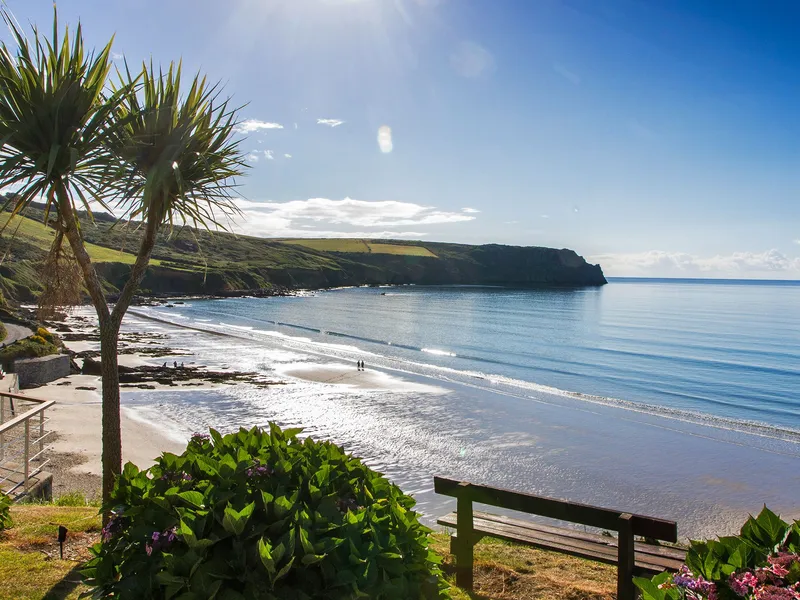
Carne Beach, Veryan
A stone's throw from The Nare • Dogs allowed (on leads during summer)
What better way to begin our Cornwall beach guide than with The Nare's neighbour, Carne Beach? This secluded bay is renowned for being for quiet and unspoilt – off the beaten track, yet far from out of reach for hotel guests.
Think of it as a private island. Within a few short steps lies the sand, with blissful views stretching from the iconic Nare Head to the Lizard.
With gentle waves, Carne is ideal for swimming and a popular spot for windsurfing and sailing excursions. Children love it, too, thanks to its acres of shallows, rock pool and gently sloping sands.
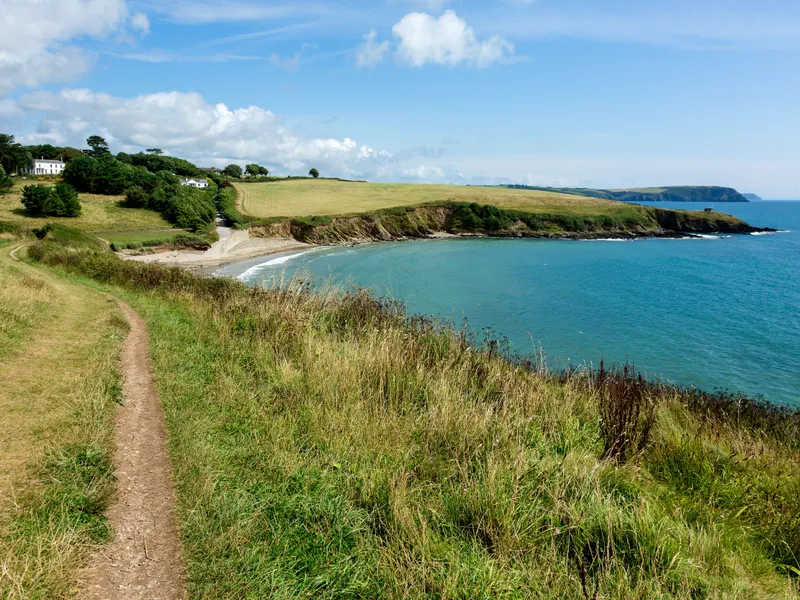
Porthcurnick Beach, Portscatho
Five miles (15 minutes) from The Nare • Dogs allowed all year round
A short drive along the coast to the southwest leads to Porthcurnick Beach. This small, sandy cove is popular with families yet has a cosy, secluded atmosphere thanks to its high cliffs and lush countryside setting. Beachgoers aside, the only signs of civilisation are the seafront homes of Portscatho to the south.
At low tide, there are plenty of rock pools for children to explore, while the slipway makes it a popular spot for water sports. The beach is served by a small cafe and several coastal trails, including a path to nearby Portscatho Beach.
Portscatho Beach
Six miles (16 minutes) from The Nare • Dogs allowed from September to June
Just south of Porthcurnick Beach lies the charming fishing village of Portscatho and the small, rocky beach that bears its name. While opportunities for sunbathing may be limited, the plethora of rock pools at this Cornish beach ensures there is always an adventure waiting to be discovered. The views, too, are bountiful, with two rocky headlands framing a deep blue panorama of sea and sky.
Beyond the beach, Portscatho is well worth exploring. Now a quietly popular tourist spot, the village is home to a variety of pubs, restaurants and cafés, each adding to its enduring appeal.
Towan Beach, St Anthony
Seven miles (20 minutes) from The Nare • Dogs allowed all year round
Not to be confused with the beach of the same name in Newquay, Towan Beach offers a quintessential Roseland experience. Here, a vast stretch of sand and shingle is backed by low, grass-covered cliffs that curl gently around the bend of the bay. It is a meeting of shore, sea and countryside that highlights some of the region's most characteristic and beautiful assets.
The beach itself is serene and secluded, despite its size. A short walk inland leads to a car park and a charming tea room. For those wishing to venture further, this Cornish beach offers a convenient starting point for two loops of the South West Coast Path.
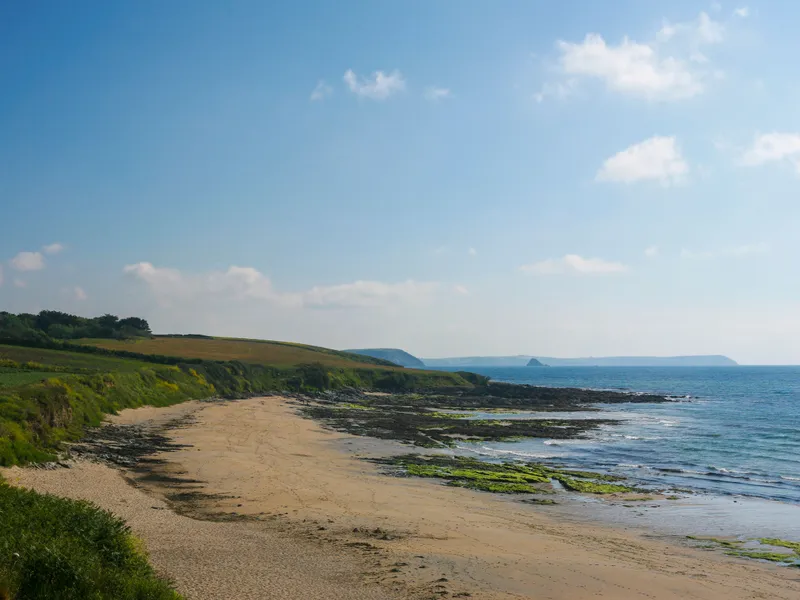
Porthbeor Beach, St Anthony
Eight miles (21 minutes) from The Nare • Dogs allowed all year round
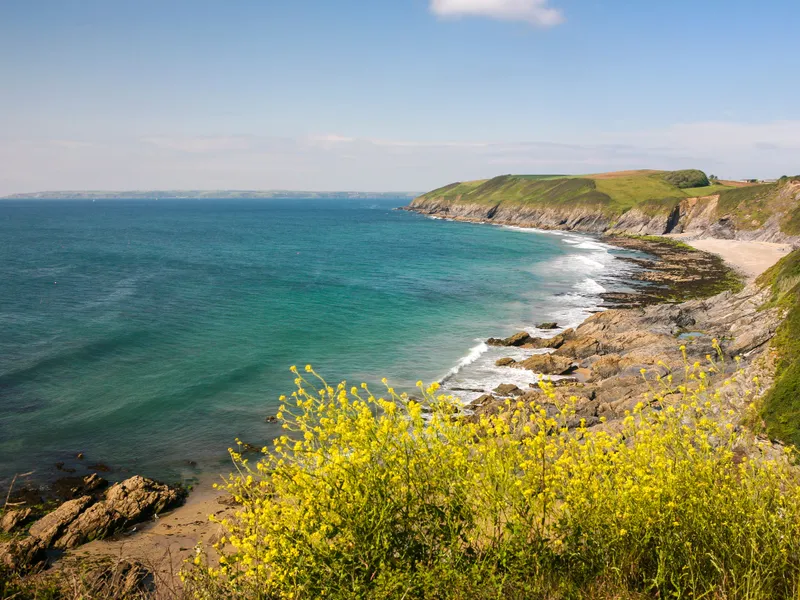
We conclude our Cornwall beach guide with one of Roseland's most secluded – and most sublime – stretches of sand. Porthbeor Beach has no parking and no facilities and is currently only accessible by boat, following the closure of its coastal path for safety reasons.
However, intrepid explorers will be richly rewarded. With access restrictions in place, what was already an uncrowded beach has become a private sanctuary of crisp, golden sand enclosed by rugged cliffs. It's one in a million, but perhaps not one for dogs, children or those lacking sea legs.